
Route to market
Build it all ourselves, or borrow a manufacturer's capacity and approvals
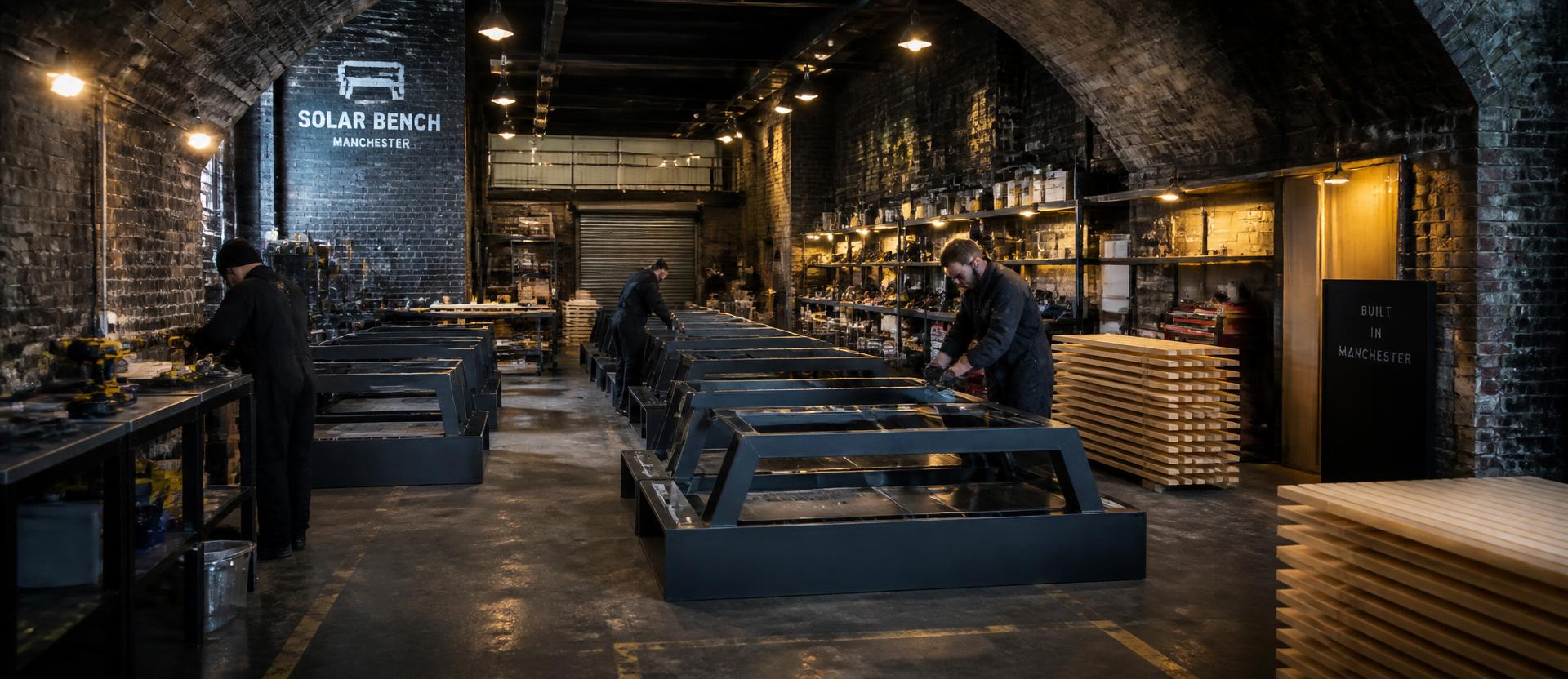
Neither answer is obviously right, so the platform scores both. In-house keeps every pound of margin and every job in Manchester. A co-branded joint venture buys capacity, approved-supplier status and national distribution on day one, at roughly half the unit margin. The hybrid keeps the story and rents the capacity.
The trade-off in numbers
Estimated: modelled at year-3 capacity
Margin gap per unit, in-house vs JV
Estimated,
Estimated: what a co-brand costs us on every bench it sells
Capacity gap, year 3
Estimated,
Estimated: units per year a partner can build that our own line cannot
Manchester jobs, in-house
Estimated0
Estimated: direct line, refurbishment, moulding, assembly and logistics roles
Manchester jobs, JV only
Estimated0
Estimated: design, materials and impact roles only if the partner builds
Candidate manufacturers
Fit scored on material overlap, capacity and procurement access
No records
Execution model per candidate partner
Revenue share, capacity, unit economics, IP and brand split, and timeline risk at your chosen annual volume
Annual demand modelled
900 units
Estimated: JV gross to us = (JV price − JV COGS) x our revenue share x units, capped by the partner's dedicated line capacity. In-house gross = (our price − our COGS) x units, capped by our own Manchester capacity at that phase. Where demand exceeds our capacity the JV column wins on volume even at half the unit margin, that crossover is the whole decision.
No records
How the decision actually gets made
Sequenced, not guessed
Pilot on our own line
The first 150 units are built in Manchester regardless of route: it proves the material spec, the generation figures and the circular story that any partner would be buying into.
Take the dataset to two manufacturers
With metered performance and a live public-realm reference, a co-brand becomes a supply conversation rather than a pitch, and the margin split negotiates from evidence.
Let the pipeline choose
If Tier 1 demand fills our own capacity, in-house wins on margin. If Tier 2 and 3 frameworks land first, the partner's approvals and capacity are worth the margin share.
Specified route to market parameters
The procurement thresholds and award routes each order size is scoped against.
- Value in use
- 160 designated town and district centres across the ten Greater Manchester authorities
- Method
- Counted from the adopted local plan and Places for Everyone centre designations for each authority, held as a fixed constant behind the procurement model.
- If it moves
- A ten centre counting difference moves programme order value by about 6 percent at six benches per centre.
- Value in use
- Under 30k GBP: direct award against borough highways minor works. 30k to 213k: three-quote mini competition. Above that: ESPO furniture framework or a GM dynamic purchasing entry.
- Method
- Mapped from standard English local-authority contract standing orders and the thresholds boroughs apply to street furniture, then matched to the pilot and programme order sizes we actually quote.
- If it moves
- A borough that insists on full framework entry adds roughly four months, which is why the first order is scoped below the direct-award ceiling.