

Our story
A panel that still works at 99% is scrapped because of paperwork. We give it a bench to work from.
Canopei exists because three separate wastes, perfectly good solar modules, seven million discarded Christmas trees and plastic nobody will buy, all become the same product. And because the people who supply that waste today pay to get rid of it, we can be paid to collect it and hand three quarters of that saving back to them.
The rule that makes this necessary
Verified regulatory position, not a modelled figure
In the UK, a module taken off a roof cannot go back onto one.
The Microgeneration Certification Scheme underpins every compliant domestic installation, grant and export tariff, and it recognises new, certified modules. A panel removed during a repower or a re-roof has no route back into a certified grid-tied system, however well it tests. So it is treated as scrap while it is still producing at or near its rated output.
That is a paperwork problem creating a physical waste problem. Our canopy is off-grid and moveable: no grid tie, no export, no network notification, no MCS pathway required. The same module that was unusable on Monday does twenty-five years of honest work on a bench from Tuesday, and because the market prices it as scrap, it is the cheapest good solar you can buy.

Still 99% efficient
Modules are typically pulled during roof works long before end of life. Degradation on a ten-year-old panel is a fraction of its output, not a failure.
Off-grid removes the blocker
No grid connection means no MCS requirement, no DNO application and no electrician on site. Compliance and install cost disappear together.
Cheapest sustainable option
Scrap-priced modules plus waste timber plus waste polymer is not a green premium. It is a lower bill of materials than any new-build equivalent.
Every pain point we solve
One product, nine problems that currently have no cheap answer
Simple kit, ordinary skills
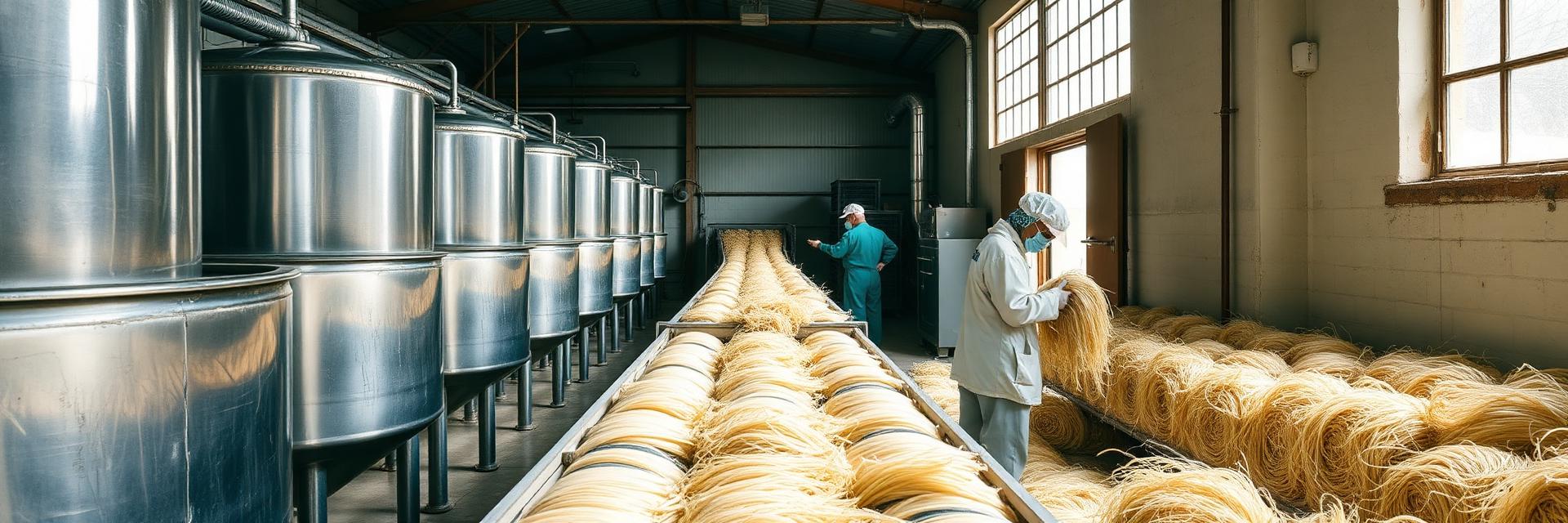
Collect, decorticate, steep in caustic soda, wash, dry, mill. Six unglamorous steps turn farm waste into cellulose powder, and they work in a shed in Cheshire or a yard in Lesotho.
What one production year actually diverts
Move the volume. Every figure below recomputes and every figure is labelled.
200 benches is a single council framework. 12,000 is the Manchester line at full two-shift capacity with the EU phase running.
Plastic diverted into structure
Estimated86.4 t
48 kg of moulded recycled polymer per bench, from the material specification.
Equivalent plastic bottles
Estimated4,547,368
Diverted polymer mass divided by 19 g, the mass of a typical 500 ml PET bottle. Illustrative only.
Solar modules rescued from scrap
Verified3,600
2 reclaimed modules per bench, arithmetic on the build.
Christmas trees converted
Estimated25,200
14 tree poles per bench at 24 kg average mass.
Tree tonnage kept out of chip and burn
Estimated604.8 t
Trees converted multiplied by average kerbside tree mass.
Share of UK annual tree arisings
Estimated0%
Against 7,000,000 real trees discarded in the UK each season.
Farm biomass collected
Estimated137.6 t
26 kg of cellulose per bench at a 34% yield from raw stalk.
Cash saved by growers
Estimated£4,129
Disposal at £40/t against our £10/t collection fee, they keep 75% of the spend.
Feedstock earns on the way in
At this volume the collection fees growers pay us come to £1,376. That is income before a single bench is sold, and it nets straight off decortication and milling. We do not buy our raw material. We are paid to remove it.
EstimatedJobs this volume supports
Roughly 0 roles across moulding, timber machining, PV grading, electronics and assembly, trainable in weeks, not years.
Open the impact calculatorCivils never spent
Placed five to a site, this volume covers 360 sites that would otherwise need a mains outdoor supply, around £1,512,000 of trenching, cable and board work that never happens.
EstimatedThe story in eight moves
Written to be checked, not admired
How simple the conversion really is
The same chain runs for pine at home and hemp abroad
- 1
Collect and get paid
Trees from kerbside and depot arisings; stalk from farms. Growers pay 25% of their disposal cost for the collection.
£10 per tonne in
- 2
Machine the pole
The straight centre pole is docked and ripped into slat stock. Offcuts and branch go to the fibre line.
Seat, bearers, table top
- 3
Decorticate
Stalk is broken open to separate bast fibre and woody hurd.
Low-cost mechanical kit
- 4
Caustic steep
A controlled sodium hydroxide steep removes lignin and pectin, leaving clean cellulose. Closed-loop, neutralised and monitored.
Bulk chemical, ordinary PPE
- 5
Wash and dry
Rinse to neutral pH, press and dry to storable moisture content.
Water recirculated
- 6
Mill to powder
Dried cellulose is milled to a fine, free-flowing powder ready to compound.
34% yield from raw stalk
- 7
Compound the pellet
Cellulose powder blends into washed recycled plastic to make pine and hemp plastic pellets that stay cool in sun.
Local plastic waste consumed
- 8
Injection mould
Pellets are moulded into the bench sides and structural components.
48 kg per bench
- 9
Assemble and place
Reclaimed modules, battery, ports, lighting and mesh node fitted. No groundworks on site.
Same-day install

At home
Manchester makes the benches. The wages, the National Insurance, the business rates and the gross value added land in the city region the company came from.
The Manchester chapter
The city that wrote the rules we use
The first industrial city built the template for making things at scale. The Rochdale Pioneers wrote the co-operative rules that our 10% district pledge and 50/50 supplier SPVs are modelled on. Manchester opened Britain's first free public library on the argument that a public good costs less than its absence, which is the same argument as a bench that gives its charge away. Graphene came out of the same city two centuries later, which is why an engineered cellulose composite can be commercialised here.
Devolution turned into a buying channel
Greater Manchester proved a combined authority can commission and brand public realm across ten boroughs at once, then won a trailblazer devolution settlement to fund it from one pot. That method has gone national with a 20% business rates cut for pubs, social clubs and live music venues from April, on top of January's 15%. Rates relief cuts the cost of opening; Canopei cuts the cost of trading outside and after dark.
Read the Manchester chapterWhat it does at home, and what it does abroad
Manchester, and the trees on its kerbs
Light manufacturing left the city and took entry-level skilled work with it. The line brings back moulding, machining, PV grading, electronics and assembly, roles with a short training route and a real wage. Every January the trees that would be chipped or burned become the timber we sit on.
- · 0.0 roles per 1,000 benches, modelled from the role mix
- · PAYE, National Insurance and business rates recomputed live by volume
- · Tree-pole timber replaces virgin hardwood in seats and tops
Owned half by the farmers who supply it
In each partner country we form a special purpose vehicle owned 50/50 with the local farmer body. They run collection and first-stage processing to cellulose powder, and compound local plastic waste in-country. The value, the jobs and half the equity stay where the material comes from.
- · 0 SPVs modelled with capex, capacity and payback
- · Growers keep 75% of a disposal cost they cannot avoid
- · Local plastic waste gains a local buyer for the first time
The 10% that goes back
A term of supply, published and audited, not a marketing line
Pledge pot at this volume
Estimated£275,940
10% of modelled gross profit at £3,650 average selling price and 42% gross margin.
Regions receiving allocation
Verified0
Count of regions in the published allocation schedule.
Causes funded
Verified0
Distinct housing and social care causes in the allocation schedule.