
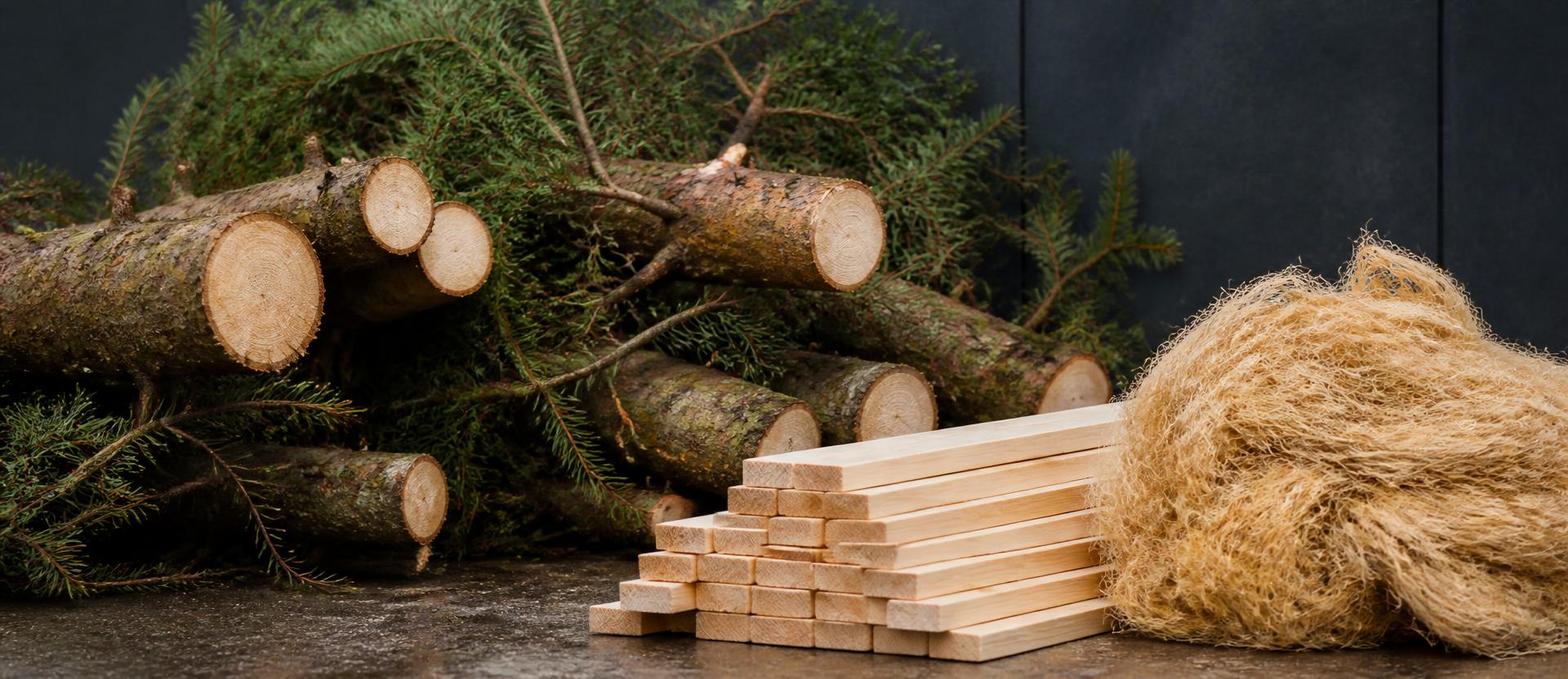
The material is already there. Nobody has joined it up.
Hemp stalk, sisal waste and sawmill residue exist across eastern and southern Africa in volumes that would keep our line running for a decade, and in almost every case the grower currently pays to get rid of it. What does not exist, anywhere on the continent, is an integrated fibre to composite-pellet line. Pulp capacity, decortication and compounding all exist separately. Joined together, at origin, under a grower-owned arm, they turn a disposal cost into a processed export and give us a landed material price no virgin polymer line can approach. This page shows the partners, the cost of every stage, and the three prices we will not invent.
£469/t
Pellets landed in Manchester at the current model settings
Estimated£29
Compound cost inside one bench deck
Estimated405
Direct jobs across origin and Manchester at this volume
EstimatedIntegrated lines in Africa today
Verified0
Fibre to certified composite pellet, joined up
Pellet bulk density gain
Estimated~4x
Against baled biomass, per container
Reclaimed panel price
Estimated£5
Per module, against £78 new
Prices marked quote required
Assumed3
Farmgate, decortication, freight
Named candidates, with the contact status stated.
Not one of these is a signed supplier and the status column says so on every row. They are here because each one holds a specific stage we need: licensed volume, decortication labour, cellulose chemistry to a specification, or the capital that makes a line at origin financeable rather than aspirational.
Grower or aggregator
- Country
- South Africa
- Stage held
- Residue supply and first-stage decortication
- Why them
- Licensed hemp production and processing under the South African permit regime, with existing hurd and shiv volumes that currently go to animal bedding and construction blocks at low value.
- Status
- Approach drafted
- Country
- South Africa
- Stage held
- Grower aggregation and standards
- Why them
- Sector body rather than a single farm, which is the fastest route to an aggregated tonnage commitment across many smallholdings instead of one estate.
- Status
- Approach drafted
- Country
- South Africa, Limpopo
- Stage held
- Residue supply and solar drying
- Why them
- Community-scale cultivation in a province with strong solar resource, so the same site can host drying without a fuel bill.
- Status
- Not contacted
- Country
- Lesotho
- Stage held
- Licensed feedstock and industrial siting
- Why them
- Lesotho issued cannabis and hemp cultivation licences early and the LNDC exists to place industrial offtake against them, which is exactly our shape of deal.
- Status
- Approach drafted
- Country
- Malawi
- Stage held
- Residue supply
- Why them
- Malawi legalised industrial hemp in 2020 and the association coordinates growers who currently have fibre but no fibre buyer.
- Status
- Not contacted
- Country
- Zimbabwe
- Stage held
- Residue supply and decortication
- Why them
- Two of the small number of Zimbabwean operators with actual harvest history rather than announcements, in a country with cheap decortication labour.
- Status
- Not contacted
- Country
- Tanzania
- Stage held
- Alternative fibre and residue supply
- Why them
- Sisal is the fallback fibre when a hemp harvest fails. The board sits on tens of thousands of tonnes of decortication waste a year, which is currently a disposal problem.
- Status
- Not contacted
- Country
- Kenya
- Stage held
- Alternative fibre supply
- Why them
- Pineapple leaf fibre from crop residue, already proven as a textile feedstock. Useful as a third fibre in the recipe and a signal that residue-to-fibre supply chains work commercially in East Africa.
- Status
- Not contacted
Fibre and pulp converter
- Country
- South Africa
- Stage held
- Cellulose preparation
- Why them
- Dissolving pulp at industrial scale with cellulose chemistry in house. The only realistic partner if we want cellulose prepared to a specification rather than to a farmer's best effort.
- Status
- Approach drafted
- Country
- South Africa
- Stage held
- Cellulose preparation and export logistics
- Why them
- Packaging and pulp operations with existing export logistics from Durban and Richards Bay, which is the freight leg we need solved as much as the chemistry.
- Status
- Not contacted
- Country
- Tanzania
- Stage held
- Pine residue and milling
- Why them
- Large sawmill complex producing pine residue as a by-product, which is the other half of our seasonal recipe and lets one origin serve both feedstocks.
- Status
- Not contacted
Finance or programme vehicle
- Country
- Multi-country
- Stage held
- Capital for the pellet line and grower training
- Why them
- German development cooperation funds value-addition-at-origin projects, which is precisely the argument for pelletising in Africa rather than baling and exporting raw.
- Status
- Not contacted
- Country
- Multi-country
- Stage held
- Grower-owned processing arm
- Why them
- Smallholder income is IFAD's mandate. A grower-owned processing arm that raises income from what is currently waste fits their instruments better than a plain offtake.
- Status
- Not contacted
- Country
- Multi-country
- Stage held
- Processing zone siting and debt
- Why them
- AfDB lends into agro-industrial processing zones. A pellet line inside an existing zone avoids us funding power, water and road access ourselves.
- Status
- Not contacted
The same partners feed the kiln. Here is who owns the carbon.
Every fibre partner also produces the fines fraction the biochar joint venture runs on, so each one carries a carbon position whether or not we discuss it. The volume column is ours, modelled from hectares. The MRV column below separates what a partner has actually told us from what we are estimating in the absence of a document, because that distinction is the whole difference between a claim and a credit.
Hemp Solutions South Africa
South Africa · Jointly owned unit
Residue at the yard
Estimated4,200 t/yr
32 per cent of it goes to the kiln
To the kiln
Estimated1,344 t/yr
Fines and short fibre a certified deck cannot use
Char produced
Estimated403 t/yr
At the char yield stated on the biochar page
Net removal
Estimated869 t CO2/yr
After kiln emissions and the drying heat displaced
Carbon rights
Jointly owned unit, split 50/50 at the registry account. Licensed operator with existing volume, so the first kiln goes here and the operating standard matters more than the ownership optics. Rights registered once to the JV entity, split written in before the first batch.
- Claimed by partner
- Weighbridge already on site for the bedding trade
- What we model instead
- 4,200 t a year residue, 1,344 t to the kiln
- Source
- Claimed by partner
- Basis
- Weighbridge existence is claimed and plausible for a licensed operation. Tonnage is our figure from hectares, not their ticket data.
- Claimed by partner
- Nothing claimed
- What we model instead
- 0.42 H/Corg at 500 degrees, continuous retort
- Source
- Estimated by us
- Basis
- Literature range for hemp hurd char at that temperature. No sample has been tested.
- Claimed by partner
- Nothing claimed
- What we model instead
- 42 kg CO2e per tonne feedstock
- Source
- Estimated by us
- Basis
- Self-sustaining pyrolysis plus diesel handling. No kiln exists to meter.
- Claimed by partner
- Own land available for application
- What we model instead
- 35 per cent of char retained for own soil, balance sold locally
- Source
- Claimed by partner
- Basis
- Land availability is claimed. No application record format is agreed yet.
Lesotho National Development Corporation
Lesotho · Grower-owned kiln, Canopei offtake
Residue at the yard
Estimated2,600 t/yr
30 per cent of it goes to the kiln
To the kiln
Estimated780 t/yr
Fines and short fibre a certified deck cannot use
Char produced
Estimated234 t/yr
At the char yield stated on the biochar page
Net removal
Estimated504 t CO2/yr
After kiln emissions and the drying heat displaced
Carbon rights
Grower cooperative, financed against our offtake. Rights stay with the cooperative. We buy removal tonnes at an agreed price and retire nothing on their behalf without written instruction, which is the condition the LNDC development mandate makes easiest to satisfy.
- Claimed by partner
- Nothing claimed
- What we model instead
- 2,600 t a year residue, 780 t to the kiln
- Source
- Estimated by us
- Basis
- Modelled from licensed hectares, not from a weighbridge. No scale is installed.
- Claimed by partner
- Nothing claimed
- What we model instead
- 0.45 H/Corg
- Source
- Estimated by us
- Basis
- Same literature basis, with a small penalty for a colder highland operating window.
- Claimed by partner
- Nothing claimed
- What we model instead
- 48 kg CO2e per tonne feedstock
- Source
- Estimated by us
- Basis
- Uplift on the base figure for longer haulage between fields and the yard.
- Claimed by partner
- Nothing claimed
- What we model instead
- Local application through cooperative members
- Source
- Not available
- Basis
- There is no member list, no field register and no signature route, so this input cannot be evidenced today at any confidence.
Cannabis Research Association, Malawi
Malawi · Grower-owned kiln, Canopei offtake
Residue at the yard
Estimated1,900 t/yr
34 per cent of it goes to the kiln
To the kiln
Estimated646 t/yr
Fines and short fibre a certified deck cannot use
Char produced
Estimated194 t/yr
At the char yield stated on the biochar page
Net removal
Estimated418 t CO2/yr
After kiln emissions and the drying heat displaced
Carbon rights
Grower association, held on behalf of member farms. An association holding rights for many smallholdings needs a member level allocation rule before issuance, otherwise a single registry account quietly absorbs value that belongs to individual farms.
- Claimed by partner
- Aggregation points already used for fibre collection
- What we model instead
- 1,900 t a year residue, 646 t to the kiln
- Source
- Claimed by partner
- Basis
- Collection points are claimed. Weighing at those points is not established.
- Claimed by partner
- Nothing claimed
- What we model instead
- 0.44 H/Corg
- Source
- Estimated by us
- Basis
- Literature range. Untested.
- Claimed by partner
- Nothing claimed
- What we model instead
- 44 kg CO2e per tonne feedstock
- Source
- Estimated by us
- Basis
- Base figure with a short haulage assumption.
- Claimed by partner
- Nothing claimed
- What we model instead
- Member field application, unrecorded
- Source
- Not available
- Basis
- Many small fields is the hardest fate case to evidence and the one most likely to fail audit first.
Canhem and Willowmead
Zimbabwe · Grower-owned kiln, Canopei offtake
Residue at the yard
Estimated1,400 t/yr
36 per cent of it goes to the kiln
To the kiln
Estimated504 t/yr
Fines and short fibre a certified deck cannot use
Char produced
Estimated151 t/yr
At the char yield stated on the biochar page
Net removal
Estimated326 t CO2/yr
After kiln emissions and the drying heat displaced
Carbon rights
Operator companies, individually. Two separate companies, so two separate rights conversations and two registry accounts. No pooled claim until both agree an identical measurement protocol.
- Claimed by partner
- Nothing claimed
- What we model instead
- 1,400 t a year residue, 504 t to the kiln
- Source
- Estimated by us
- Basis
- From harvest history rather than announcements, but still our estimate.
- Claimed by partner
- Nothing claimed
- What we model instead
- 0.46 H/Corg
- Source
- Estimated by us
- Basis
- Literature range, penalised for likely batch variability on a smaller unit.
- Claimed by partner
- Nothing claimed
- What we model instead
- 52 kg CO2e per tonne feedstock
- Source
- Estimated by us
- Basis
- Higher, because grid backup here is more likely to be a diesel generator.
- Claimed by partner
- Nothing claimed
- What we model instead
- Sold to local growers, buyer reference retained
- Source
- Estimated by us
- Basis
- A sale record is easier to hold than a field record, so this is the more evidenceable route.
Tanzania Sisal Board
Tanzania · Jointly owned unit
Residue at the yard
Estimated9,800 t/yr
28 per cent of it goes to the kiln
To the kiln
Estimated2,744 t/yr
Fines and short fibre a certified deck cannot use
Char produced
Estimated823 t/yr
At the char yield stated on the biochar page
Net removal
Estimated1,774 t CO2/yr
After kiln emissions and the drying heat displaced
Carbon rights
Board and Canopei, jointly, per estate. Sisal decortication waste is already concentrated at estate scale with existing industrial records, which makes it the strongest MRV candidate on this list despite being the newest feedstock to the recipe.
- Claimed by partner
- Estate scale production records exist for the primary fibre
- What we model instead
- 9,800 t a year residue, 2,744 t to the kiln
- Source
- Claimed by partner
- Basis
- Primary fibre records are documented industrially. Residue mass is not separately weighed today, so our figure is derived.
- Claimed by partner
- Nothing claimed
- What we model instead
- 0.4 H/Corg
- Source
- Estimated by us
- Basis
- Sisal residue chars slightly cleaner than hurd in the literature. Untested here.
- Claimed by partner
- Nothing claimed
- What we model instead
- 40 kg CO2e per tonne feedstock
- Source
- Estimated by us
- Basis
- Lowest of the set, because feedstock and kiln would sit in the same yard.
- Claimed by partner
- Nothing claimed
- What we model instead
- Applied on estate, single land holding
- Source
- Estimated by us
- Basis
- One landowner and one field register is the easiest fate case to audit, once a register exists.
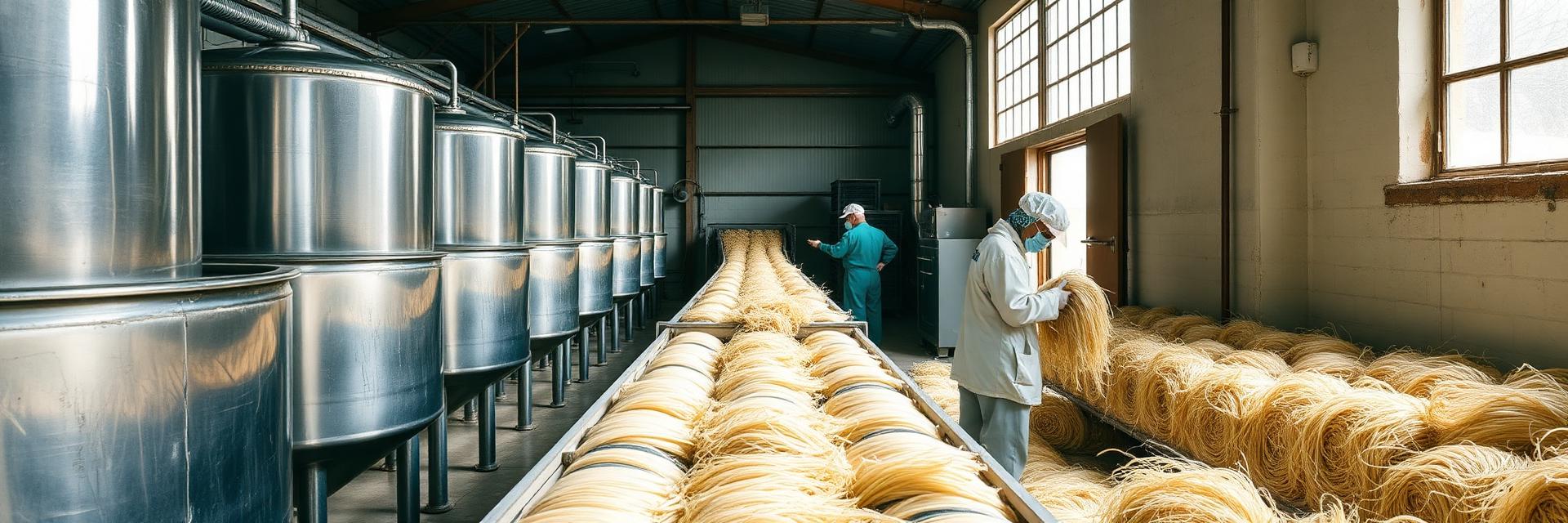
Every stage carries a cost, a yield loss and a headcount.
The split is deliberate. Everything that benefits from sunshine, cheap labour and proximity to the crop happens at origin. Everything that has to be certified, tooled and accountable to a UK buyer happens in Greater Manchester. Pellets are the handover point because they are the densest, driest, most inspectable form the material takes.
Yield loss is where the honesty lives. A tonne of stalk in the field is not a tonne of compound in a deck. Roughly a third leaves at decortication as fines and short fibre, and that fraction is exactly the feedstock the biochar venture runs on, which is why the two models are siblings rather than a bolt-on.
- Where
- Origin, at the farm
- What happens
- Stalk left after the primary crop is taken. Today it is burned, ploughed in or paid to be moved, so the starting price is low and in some cases negative.
- Cost per tonne
- £6
- Yield loss
- 4.0%
- Jobs per kt/yr
- 9
- Basis
- Quote required
- Where
- Origin, village or cooperative scale
- What happens
- Stalk separated into bast fibre and woody hurd. We want the hurd; the bast has a higher-value textile market that stays with the grower.
- Cost per tonne
- £74
- Yield loss
- 32.0%
- Jobs per kt/yr
- 14
- Basis
- Quote required
- Where
- Origin
- What happens
- Moisture out under the sun rather than under a gas burner, then milled to a particle size the compounder can meter. This is where the origin choice pays for itself.
- Cost per tonne
- £28
- Yield loss
- 11.0%
- Jobs per kt/yr
- 6
- Basis
- Estimated
- Where
- Origin, converter partner
- What happens
- Cleaning and sizing to a stated cellulose content and ash limit, so the compound behaves the same batch to batch. Without this stage the mechanical envelope cannot be certified.
- Cost per tonne
- £96
- Yield loss
- 8.0%
- Jobs per kt/yr
- 5
- Basis
- Estimated
- Where
- Origin, new line
- What happens
- Cellulose plus recycled polymer and coupling agent, extruded and pelletised. This is the step nobody in Africa currently runs joined up to a fibre supply.
- Cost per tonne
- £118
- Yield loss
- 3.0%
- Jobs per kt/yr
- 11
- Basis
- Estimated
- Where
- Sea, then inland
- What happens
- Pellets are dense dry cargo at roughly four times the bulk density of bales, so the same container carries four times the usable compound.
- Cost per tonne
- £82
- Yield loss
- 0.5%
- Jobs per kt/yr
- 2
- Basis
- Quote required
- Where
- Greater Manchester
- What happens
- Deck slats, end caps and housings moulded on UK tooling. Scrap is reground on site and fed back in the same shift.
- Cost per tonne
- £214
- Yield loss
- 2.0%
- Jobs per kt/yr
- 18
- Basis
- Estimated
- Where
- Greater Manchester
- What happens
- Frame, reclaimed array, storage, power electronics, connectivity module and sensor head fitted, then electrically and mechanically tested before dispatch.
- Cost per tonne
- £168
- Yield loss
- 0.0%
- Jobs per kt/yr
- 26
- Basis
- Estimated
Three prices nobody publishes, so we are not going to pretend.
Each of these moves the landed cost materially, each is genuinely unavailable from any index we could cite in good conscience, and each has a named party who can turn it into a quotation. Until then, the model runs on the value shown and the range is on the page rather than in a footnote.
- Used
- £6/t
- Range
- £-10 to £24
- Why it is not published
- There is no exchange or index for hemp hurd anywhere in Africa, because there is no volume buyer to set a price. Negative values are realistic where the grower currently pays to clear the field.
- Who can quote it
- Hemp Solutions SA, AHCSA members, LNDC, CRA Malawi
- Used
- £74/t
- Range
- £42 to £130
- Why it is not published
- The spread is a machine question, not a market question. Hand-fed village units and a single imported line differ by three times per tonne, and neither publishes rates.
- Who can quote it
- Cooperative operators, Canhem, Willowmead, Tanzania Sisal Board
- Used
- £82/t
- Range
- £48 to £145
- Why it is not published
- Container rates on southern and eastern African lanes move faster than any published index we could cite honestly, and a bulk pellet booking is priced individually.
- Who can quote it
- Freight forwarders at Durban, Mombasa and Dar es Salaam
Hectares in, benches and grower income out.
Farmgate price and decortication are paid on residue mass, freight and everything after is paid on the mass that survives, so the conversion share does more damage to the landed cost than any single price on the page. Move it first.
Assumptions
Hectares under contract
1,800Usable residue per hectare
4.6 tResidue that becomes compound
55 per centFarmgate residue price
£6/tDecortication
£74/tFreight to Manchester
£82/tResidue collected
Estimated8,280 t
A year, across the contracted area
Pellets produced
Estimated4,554 t
Dense dry cargo leaving origin
Benches supportable
Estimated73,452
At 62 kg of compound per deck
Landed pellet cost
Estimated£469/t
£29 of material per bench
Paid to growers
Estimated£49,680
A year, for material they pay to clear today
Origin processing spend
Estimated£1,439,064
Wages, power and consumables at origin
Origin jobs
Estimated205
Collection through pelletising
Manchester jobs
Estimated200
Moulding, assembly and test
3,726 tonnes a year never makes a deck.
Fines, dust and short fibre are screened out before compounding. Burned in the open, that carbon is back in the air within a season. Pyrolysed, most of it becomes a stable solid and the waste heat dries the fibre we do want. That is the biochar joint venture, and it runs on this number.
See the biochar JV
The better deal for us is also the better deal for them.
The obvious model is to buy stalk at the field edge and own everything after it. It is cheap per tonne and it makes us an industrial operator in a country we do not live in, carrying every operating risk in a plant we cannot see.
The alternative is to help the cooperative own decortication and pelletising as a new business arm, and to commit to a multi-year offtake at an agreed margin over their verified cost. That commitment is what makes the equipment financeable. Grower income per tonne rises roughly seven times, the bast fibre and the biochar lines stay in their hands, and we buy a finished product to a specification instead of running a factory by correspondence.
We pay more per tonne for that. Above roughly 12,875 tonnes of pellets a year, not carrying the origin plant ourselves repays the premium, which is well inside the volume a single deployment programme needs.
- How it works
- Simplest deal. The grower sells raw stalk at the field edge and walks away. We own decortication, drying, cellulose prep and the pellet line, and we carry all of the capital.
- Grower receives
- £6/t
- Grower capital
- £0
- We pay per pellet tonne
- £320
- Their upside
- A payment for something that costs them money today, with no equipment to buy and no new skill to learn.
- Our risk
- We fund and run industrial plant in a country we do not live in, and we own every operating risk in it.
- How it works
- The grower cooperative owns decortication and pelletising as a new business arm. We commit to a multi-year offtake at an agreed margin over their verified cost, which is what makes the equipment financeable.
- Grower receives
- £41/t
- Grower capital
- £178,000
- We pay per pellet tonne
- £352
- Their upside
- Waste becomes a processed product with a contracted buyer. Income per tonne rises roughly seven times, and the bast fibre and biochar lines stay in their hands too.
- Our risk
- We pay more per tonne and depend on someone else's quality control, so the specification and the audit have to be contractual rather than trusting.
- How it works
- A shared entity: growers contribute land, residue and labour, we contribute tooling, specification and the offtake. Profit split on the pellet line, with grower buy-out rights over time.
- Grower receives
- £28/t
- Grower capital
- £46,000
- We pay per pellet tonne
- £336
- Their upside
- Income now plus a share of the processing margin and a route to owning the line outright, without funding it alone up front.
- Our risk
- Governance. A shared entity across borders needs real reporting, and buy-out mechanics have to be written before the first tonne moves, not after.
A researched model, not a supply chain.
No tonne has moved. Every partner above is a researched candidate at the contact status shown, not a signed supplier, and nothing on this page should be read as an agreement.
The three Quote required lines are the difference between a model and a quotation. Until they are firm, the landed cost carries a range and not a number.
Nobody in Africa currently runs an integrated fibre to composite-pellet line. That is our opening, and it is also the reason the first line will take longer and cost more than the steady-state figures here.
Every partner claim, back to a public source.
- [1]
Hemp cultivation permits and the hemp regulatory framework · Department of Agriculture, Land Reform and Rural Development, South Africa
That licensed industrial hemp cultivation exists at commercial scale in South Africa, which is what makes an aggregated residue contract possible there.
Verified
- [2]
Investment and industrial development in Lesotho · Lesotho National Development Corporation
That Lesotho has an industrial development body mandated to place offtake and siting deals against licensed cultivation.
Verified
- [3]
Cannabis Regulation Act 2020, industrial hemp provisions · Government of Malawi
That industrial hemp cultivation was legalised in Malawi in 2020.
Verified
- [4]
Sisal production and processing in Tanzania · Tanzania Sisal Board
That Tanzania produces sisal at national scale, generating decortication residue that is currently a disposal problem rather than a product.
Verified
- [5]
Dissolving pulp and speciality cellulose operations · Sappi
That industrial cellulose preparation capacity exists in South Africa to a stated specification.
Verified
- [6]
Pulp and packaging operations, South Africa · Mondi Group
Existing pulp capacity and established export logistics from South African ports.
Verified
- [7]
Agricultural value chains and value addition at origin · GIZ
That development finance instruments exist specifically for adding processing value in the producing country.
Verified
- [8]
Smallholder agribusiness and rural enterprise financing · IFAD
That smallholder-owned processing enterprises are a funded category, which is the basis of the grower-owned business arm.
Verified
- [9]
Special agro-industrial processing zones · African Development Bank
That serviced agro-industrial processing zones exist and can host a pellet line without us funding power, water and road access.
Verified