
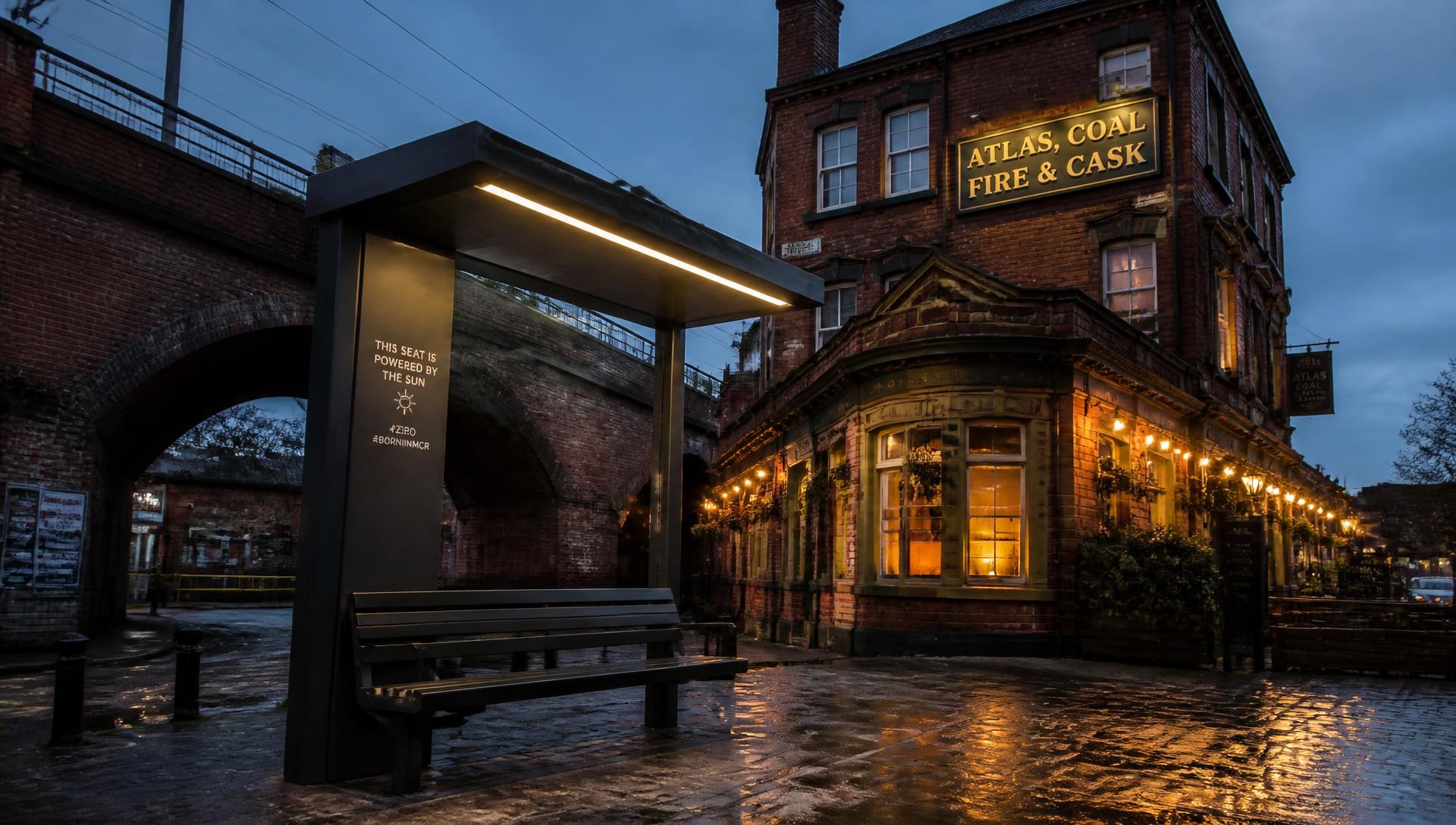
The first city to industrialise is the right city to industrialise the way back.
Canopei is designed, compounded, graded and assembled in Greater Manchester, and that is not sentiment. This is the city that invented the factory system[1], wrote the rules of the co-operative movement in a Rochdale shop in 1844[3], opened Britain's first free public library in 1852 on the argument that a public good is cheaper than its absence[4], and isolated graphene two centuries later[5]. Every one of those is a working part of how this company is built. Every claim on this page is numbered to a published source in the references at the foot.
0
Greater Manchester boroughs reachable through one combined authority [6][7]
Verified0%
Business rates cut for pubs, clubs and live music venues in England from April [8]
Verified0%
Of every order modelled as spend retained inside the city region (assumptions register)
EstimatedManchester's history is not decoration on this business. It is the operating manual.
Cotton[1], canals[2], co-operation[3], free libraries[4], graphene[5]. Five habits the city keeps repeating: make the thing yourself, build your own route to market, share the surplus with the people who supply you, give the public good away, and commercialise a new material before anyone else believes in it. Canopei does all five.
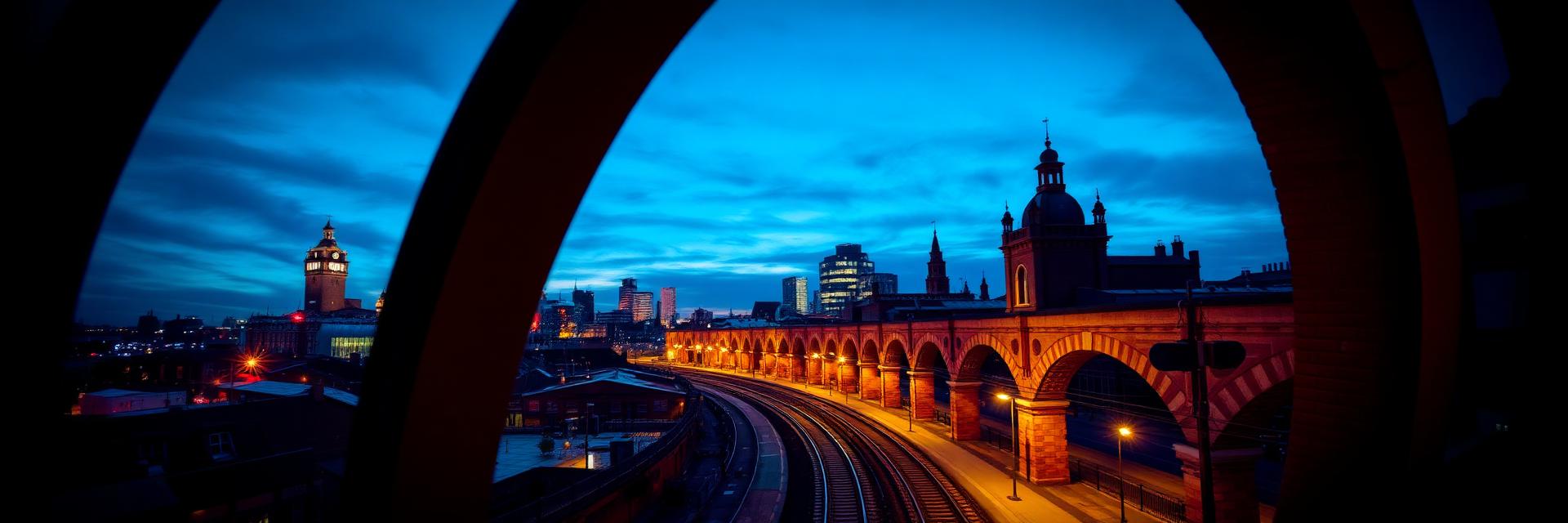
A mayoralty that became a national programme, and a rates cut aimed at the pub.
Greater Manchester spent a decade proving that a combined authority can commission and brand public realm across ten boroughs at once: bus franchising taken back into public control and the Bee Network put across trams, buses and cycling[6], and a trailblazer devolution settlement that consolidated funding into a single local pot[7].
That method has now gone national. The 20% cut to business rates for pubs, social clubs and live music venues from April[8], layered on the 15% hospitality relief announced in January[9], is a Manchester reading of the problem: the high street does not need a slogan, it needs its fixed costs down and its trading hours up.
Rates relief lowers the cost of being open. Canopei lowers the cost of trading outside and after dark. A bench that arrives on a pallet, needs no trench, no electrician and no metered supply, and then hands out light, shade and free charging until closing time, is a high street intervention that a landlord can buy and a council can specify.
Canopei has no partnership with, and claims no endorsement from, any authority or office holder. Policy is cited as published context for where the demand sits[12].
What it would take to light every high street in Greater Manchester.
Every input below is yours to move. Start from a preset, then set density, adoption, price, local content and rollout length. The table, the totals and the annual run rate recalculate live. Population and centre counts are sourced; everything downstream of them is Estimated and says so.
Your assumptions are saved in the address bar as you move them, so the link opens this exact scenario for anyone you send it to. The download is a spreadsheet holding the inputs, the totals, the borough table and the basis note.
0
Benches across the ten boroughs
Estimated£0
Total order value
Estimated£0
Modelled spend retained in the city region
Estimated0 + 0
Direct roles plus modelled indirect roles
Estimated0
Benches per year across 3 years
Estimated£0
Annual order value run rate
Estimated£0
Order value per city region resident
EstimatedNo records
Participating centres, benches, order value and retained spend are modelled from the inputs above, not sourced. See the references for the population and centre-count sources behind the first two columns.
How a bench actually lands outside a pub, specified line by line.
Four delivery cases in recognisable Manchester settings, written so a landlord, a highways officer or an insurer can read the whole install: licence area, consent route, measured overshadowing, fixings, load priority and who owns the maintenance visit. Every parameter carries the method that produced it.
Victorian corner pub, forecourt seating
Ancoats / New Islington | Independent pub with a paved forecourt on a side street
Why it works here
Forecourt is unusable after sunset from October to March, so the trading day ends when the light does. Canopy lighting extends served seating without a supply connection or a trench.
Charging behaviour
Free USB-C at the seat, no app, no tariff. Charging sheds first if the battery falls below the reserve so light stays on until closing time.
Delivery and install
Pallet delivery, ballasted feet, no electrician, no metered supply. Two-person placement, moves if the licence area moves.
Site specification
Licence area and seating footprint
6.0 m by 2.4 m forecourt, 1.5 m clear pedestrian route kept, 2 benches at 2.0 m by 0.9 m each
Standard GM pavement licence layout: seating held inside the demise with a 1.5 m unobstructed footway.
Consent route and term
Pavement licence, 12 month term, 28 day determination, no highway works consent needed
Business and Planning Act pavement licence regime as operated by GM authorities; ballasted furniture needs no excavation consent.
Overshadowing and yield
Sky-view factor 0.62, 583 kWh/m2/yr plane-of-array, 5.1 device charges per bench-day in December
12 m street canyon between four-storey terraces applied as an annual de-rate to the city-centre irradiance series.
Fixings and security
240 kg ballast per canopy pair, M10 shear nuts, IK08 enclosure, IP66 socket flap
Wind uplift design case for terrain category IV with a 1.5x overturning reserve.
Service ownership
Licensee wipes down and reports faults, Canopei attends within five working days, two inspections a year at 46 GBP per bench-year
Two-person maintenance round covering twelve benches a day at city density.
District centre high street, bus stop cluster
Levenshulme / Chorlton style district centre | Council-specified public realm outside a parade of independents
Why it works here
Seating plus light plus free charging is a single line in a high street improvement scheme, scoreable under social value because the unit is built in the city region.
Charging behaviour
Daytime charging for shoppers and bus users, evening light for the parade. Winter output is modelled from the measured irradiance series for the city.
Delivery and install
No civils. Units can be relocated between centres as schemes rephase, which keeps them out of the fixed-asset argument.
Site specification
Scheme and budget route
Borough highways minor works, direct award under the 30k GBP ceiling for a 6 bench parade at 4,200 GBP
Local-authority contract standing orders: 25,200 GBP sits below the direct-award threshold, so no framework entry is required for the first order.
Footfall assumption
3,400 pedestrian movements a day, peak 09:00 to 10:00 and 15:30 to 18:00, 62 percent of charging demand inside daylight hours
District-centre footfall profile scaled to the parade length, cross-checked against bus stop dwell at the cluster.
Adoption and anti-theft requirements
Ballasted, not adopted as highway asset, 60 mm ground pin option, asset tag and serialised frame, quarterly condition log shared with highways
Written to what highways teams ask of relocatable furniture: no adoption liability, evidence of inspection, traceable units.
Overshadowing and yield
Sky-view factor 0.78, 733 kWh/m2/yr plane-of-array, 6.4 device charges per bench-day in December
Two-storey parade geometry applied to the city irradiance series.
Market square, events and evening economy
Town centre square in an outer borough | Civic square used for markets, screenings and seasonal events
Why it works here
Events need power and seating in the same place. A powered bench replaces generator hire for low-load uses such as lighting, tills and radios.
Charging behaviour
Public charging during market hours, plus a metered low-voltage pair for stallholder use under supervision.
Delivery and install
Placed for market layout, lifted and stored out of season if the square is cleared.
Site specification
Event calendar and load
42 market days plus 9 event days a year, 38 W sustained per served stall, 4 stalls per bench, 6 hour trading window
Stall load built from till, card reader, task light and radio charging; matched to the daily generation figure for an open square.
Storage and winter lift
Two-person lift, 96 kg per bench, stacked four high on a pallet, borough depot storage from January to February if the square is cleared
Unit mass and stacking envelope from the frame design; lift cost carried in the hire rate, not the sale price.
Insurance position
10m GBP public liability, 5m GBP products, USB-C at 5 V and 20 V only, no 230 V socket in unattended public use
Conditions insurers apply to unattended public charging: sealed low-voltage faces, documented inspection, no user-serviceable parts.
Overshadowing and yield
Sky-view factor 0.94, 884 kWh/m2/yr plane-of-array, 7.7 device charges per bench-day in December
Open civic square with no canyon de-rate beyond soiling and module condition.
Trail head and safety beacon, moorland edge
Saddleworth / West Pennine moor edge | Off-grid seating at a trail head with no supply anywhere near it
Why it works here
The nearest power is hundreds of metres away and a connection is uneconomic. Off-grid seating gives light, a charge point for head torches and GPS, and a mesh node that carries the trail.
Charging behaviour
Load priority is radio first, light second, charging last, so a December week of poor irradiance never takes the beacon down.
Delivery and install
Ground anchors rather than ballast, vandal-resistant fixings, seasonal inspection.
Site specification
Land and access
Sited on access land at a car park trail head under a licence from the landowning authority or water company, no wayleave needed as nothing is buried
Standard access-land licence route for trail furniture: annual licence, removable installation, no permanent structure.
Winter irradiance at aspect
350 m elevation, 30 degrees south, sky-view 0.94: 0.47 kWh/m2 December daily mean, 1,010 kWh/m2/yr
PVGIS series at the moor-edge coordinates, de-rated for reclaimed module condition and winter soiling.
Beacon reserve and load priority
Radio 1.1 W continuous, beacon light 3 W dusk to 23:00, charging capped at 30 Wh a day and shed below 40 percent state of charge
Sized so the radio and beacon survive a seven-day December window at a tenth of mean irradiance.
Maintenance ownership
Canopei inspects each April and October, ranger reports faults, 74 GBP per bench-year including the moor visit
Remote round costed on a single-site visit rather than the twelve-a-day urban round.
From the canal to the People's Bench: the same city solving the same problem.
Build your own route to market, industrialise the process, share the surplus, give the public good away. Heritage entries are cited in the references. Devolution entries are published policy context. Canopei entries are our plan, not a promise.
1761The Bridgewater Canal opens[2]
HeritageManchester builds its own route to market before it needs one, and the cost of moving raw material collapses.
1780sCottonopolis[1]
HeritageThe city industrialises a craft process and invents the factory system, along with everything good and bad that came with it.
1844The Rochdale Pioneers[3]
HeritageA shop on Toad Lane writes the rules of the co-operative movement: the surplus goes back to the people who supply and use it.
1852Britain's first free public library[4]
HeritageThe city argues in public that a public good is cheaper than its absence. That is the same argument as free charging.
2004Graphene isolated in Manchester[5]
HeritageThe city commercialises a new material two centuries after the last one, before the market believes in it.
2017A directly elected mayor[6]
DevolutionTen boroughs gain a single commissioning voice, which is what makes a city region scale order possible at all.
2023Trailblazer devolution settlement[7]
DevolutionFunding is consolidated into a single local pot, so public realm can be planned as a programme rather than a bid.
2026Business rates cut for pubs and venues[8]
DevolutionFixed costs come down for hospitality. What is still missing is more hours a venue can actually trade in.
NowCompounding and assembly in the city region
CanopeiRecovered panels graded, waste biomass compounded into pellets, electronics and final assembly kept inside Greater Manchester.
NextThe People's Bench on the high street
CanopeiLight, shade and free charging outside the pub and along the parade, then the same unit at the trail head and the festival.
A liability arrives on a pallet and leaves as public infrastructure.
- 1
Recover
De-installed PV modules and waste biomass arrive as a liability someone is paying to move.
Inbound logistics, city region
- 2
Grade
Every module flash tested and graded, output banded, rejects routed to material recovery.
Test and grading roles
- 3
Compound
Cellulose feedstock dried, milled and compounded into pellets to a repeatable spec.
Process operators, lab
- 4
Form
Slats and canopy sections moulded from pellet stock, frames cut and finished.
Moulding, fabrication
- 5
Assemble
Electronics, battery, charge points and mesh radio fitted, then burn-in tested as a unit.
Assembly, electronics test
- 6
Deliver
Palletised, placed by two people, no trench, no electrician, no metered supply.
Install and service crews

Recovered modules, flash tested and banded
Illustrative
Waste biomass compounded into pellet stock
Illustrative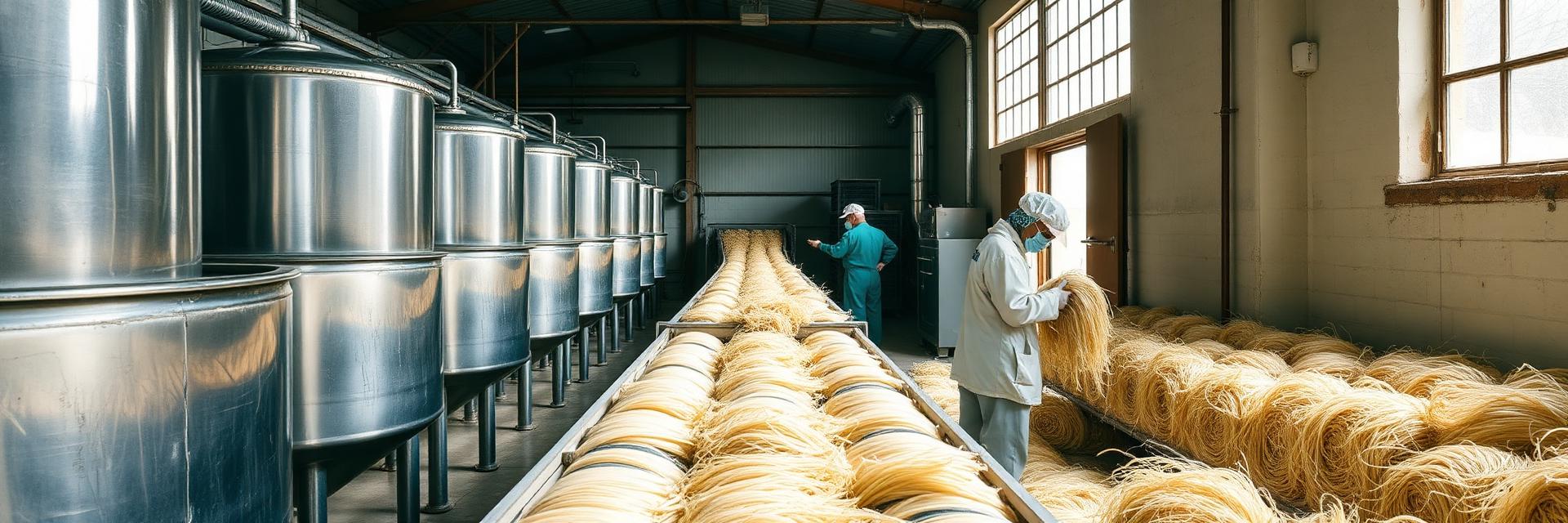
Forming, assembly and burn-in inside Greater Manchester
IllustrativeImages are indicative of the process stages described and are not photographs of a Canopei facility. Stage-by-stage headcount is modelled on the Manchester line page.
A pub does not need a grant. It needs more hours it can trade in.
Outside, after dark
Dusk-to-dawn canopy lighting turns an unusable forecourt into served seating in the months when the beer garden normally closes at sunset. No supply connection, so no standing charge to carry through winter.
Nothing to meter
Free USB-C charging with no app and no tariff, because the sun paid for the energy and there is no connection cost to recover. Dwell time goes up and the landlord's bill does not.
Specifiable by a council
Manchester manufacture, local wage spend and an audited district pledge give a procurement team something to score under social value, and the unit moves if the scheme moves.
Assembled in Greater Manchester
PV grading, compounding, electronics and final assembly stay in the city region, so the jobs, the rates and the wage spend land where the company is from.
The civic case is a number, not a slogan.
The Manchester line model prices headcount per thousand benches, PAYE and National Insurance, business rates at £62 per square metre of floor and the GVA contribution, all moving with output volume. Open it and set the volume yourself.
Every history and policy claim on this page, traced to a published source.
12 sources. Each numbered marker in the text above links here, and each entry states exactly which claim it carries and whether that claim is Verified from the source, or Estimated by us from it. Anything modelled rather than cited, such as benches per centre or retained spend, is computed from the assumptions register and labelled Estimated at the point of use.
- [1]
Cottonopolis: the world's first industrial city · Science and Industry Museum, Manchester
Manchester as the first industrial city and the origin of the factory system, from the 1780s onward.
Verified
- [2]
Bridgewater Canal and Manchester Ship Canal listings · Historic England
The city building its own route to market by canal, from the Bridgewater Canal of 1761 to the Ship Canal.
Verified
- [3]
Rochdale Pioneers Museum · Co-operative Heritage Trust
The Rochdale Pioneers of 1844 and the co-operative rules that the 10% district pledge and 50/50 supplier SPVs follow.
Verified
- [4]
Manchester Libraries · Manchester City Council
Manchester opening Britain's first free public lending library in 1852, and the public-good argument behind it.
Verified
- [5]
Graphene at Manchester · University of Manchester
Graphene isolated in Manchester in 2004 and the advanced materials cluster built around it.
Verified
- [6]
The Bee Network · Transport for Greater Manchester
Bus franchising taken back into public control and one Bee Network identity commissioned across ten boroughs.
Verified
- [7]
Greater Manchester Combined Authority trailblazer deeper devolution deal · GOV.UK
The trailblazer settlement consolidating funding into a single local pot, and the ten-borough commissioning route.
Verified
- [8]
PM slashes business rates bills for pubs, clubs and live music venues · GOV.UK press release
The 20% business rates cut for pubs, social clubs and live music venues in England taking effect from April.
Verified
- [9]
Business rates relief for retail, hospitality and leisure · GOV.UK
The earlier 15% hospitality rates cut that the 20% cut is layered on top of, and how the relief is applied to a bill.
Verified
- [10]
Estimates of the population for England and Wales, mid-year estimates · Office for National Statistics
Population figures for each of the ten Greater Manchester boroughs.
Verified
- [11]
Town and district centre counts, Greater Manchester · Adopted local plans, ten GM authorities
Centres per borough in the procurement table: 160 designated town and district centres across the ten authorities, counted from adopted local plan and Places for Everyone designations and cross-checked against the ONS high streets dataset.
Verified
- [12]
Position on policy references · Canopei
Policy is cited as published context only. Canopei has no partnership with, and claims no endorsement from, any authority or office holder.
Verified
Sources were last checked on 22 August 2026. Policy figures are cited as published context only and imply no endorsement of Canopei by any authority or office holder.